

Self-Guided Courses

 Practice with Scott — Your English course 1 level fundamentals Coach
🌱 Scott — Tu Coach de Inglés Fundamentals
Aprender inglés no tiene que ser difícil — solo necesita ser real y paso a paso.
Yo soy Scott, tu coach de inglés de Infinite English Solutions, y estoy aquí para ayudarte a construir tu base en inglés desde cero — palabra por palabra, con calma y confianza.
Aquí aprenderás lo esencial del idioma: saludos, números, colores, preguntas y frases de la vida diaria.
Te enseñaré a entender, responder y hablar con seguridad, usando oraciones cortas y naturales.
Puedes escribirme en cualquier momento y decir:
👉 “Hola, Scott. Quiero empezar.”
👉 “Ayúdame con lo básico.”
👉 “¿Podemos practicar la lección de hoy?”
En cada sesión tendrás:
✨ Gramática simple (como I am / You are)
✨ Vocabulario útil (familia, comida, rutinas)
✨ Práctica de conversación real
✨ Correcciones suaves y comentarios positivos
Al terminar este nivel podrás:
✅ Presentarte en inglés
✅ Hablar sobre tu familia
✅ Decir de dónde eres
✅ Expresar lo que te gusta
✅ Tener pequeñas conversaciones reales
Te guiaré con paciencia y claridad, paso a paso.
Sin presión — solo inglés real, fácil y divertido.
🌎 Ya sea para trabajar, viajar o estudiar, Fundamentals es tu primer paso hacia la fluidez.
🕊️ Vamos a plantar tu semilla del inglés y hacerla crecer, una clase a la vez.
¿Listo? Solo di: “Scott, quiero empezar.”
Hello and welcome to English course 1 Level fundamentals!
In this level, we start with the basics, you will learn simple words, easy sentences, and how to talk about yourself.
You will practice listening, speaking, reading, and writing.
This level is perfect if you are new to English, Don’t worry—we go step by step.
By the end of this level, you will be able to have small conversations and feel more confident.
Let’s begin your English journey together! If you are not sure this is your level, take the test!
Click below to take the Level 1 test.
You need 16 correct answers to pass.
If you pass, you will move to Level 2 – English Roots.
Good luck!
PRE-PRINCIPIANTES



What you learn! English Course 1 Level Fundamentals
30 lesson topics
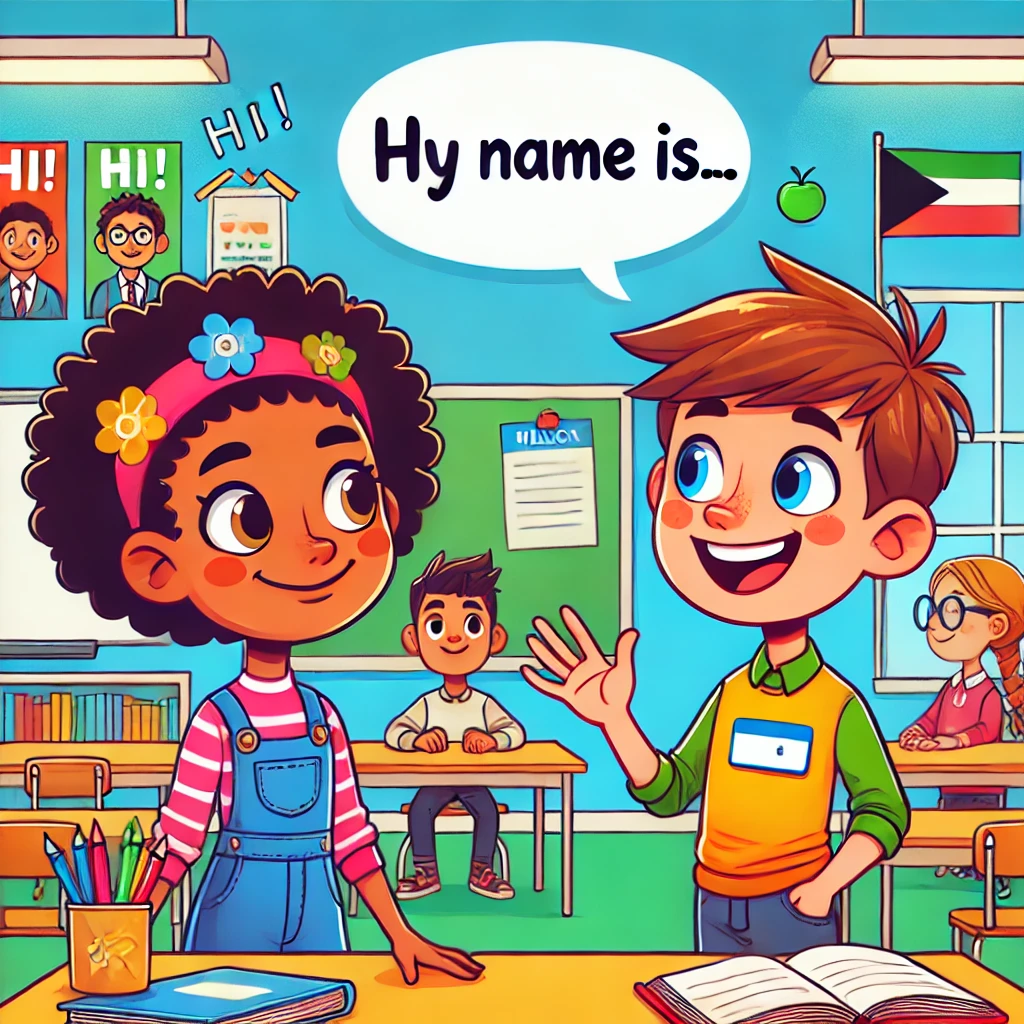
1. Meet & Greet
(Identity/Existence — I am / You are / My / Your)
- Grammar: I am / You are (basic identity)
- Vocabulary: Hello/Hi + my/your + names
- Speaking: I am ___. My name is ___.
- Listening: “My name is…” dialogue
- Reading: Mini intro: “My name is ___. “My last name is ___.”
SWAT: Students introduce themselves using “I am…” + “My name is…”

2. Family & Possessions
(Possessive Nouns and Adjectives)
- Grammar: Possessive’s + his / her + He is / she is.
- Vocabulary: Family members and Possession
- Speaking: Introduce Family Members
- Listening: “Hi, my name is … He is my…”
- Reading: Mini text: “His name is … He is my…”
- SWAT: Students will be able to introduce family using possessive nouns and adjectives.

3. How Are You Today?
(Internal state + contrast (affirmative vs negative)
- Grammar: To be — negative (I’m not …)
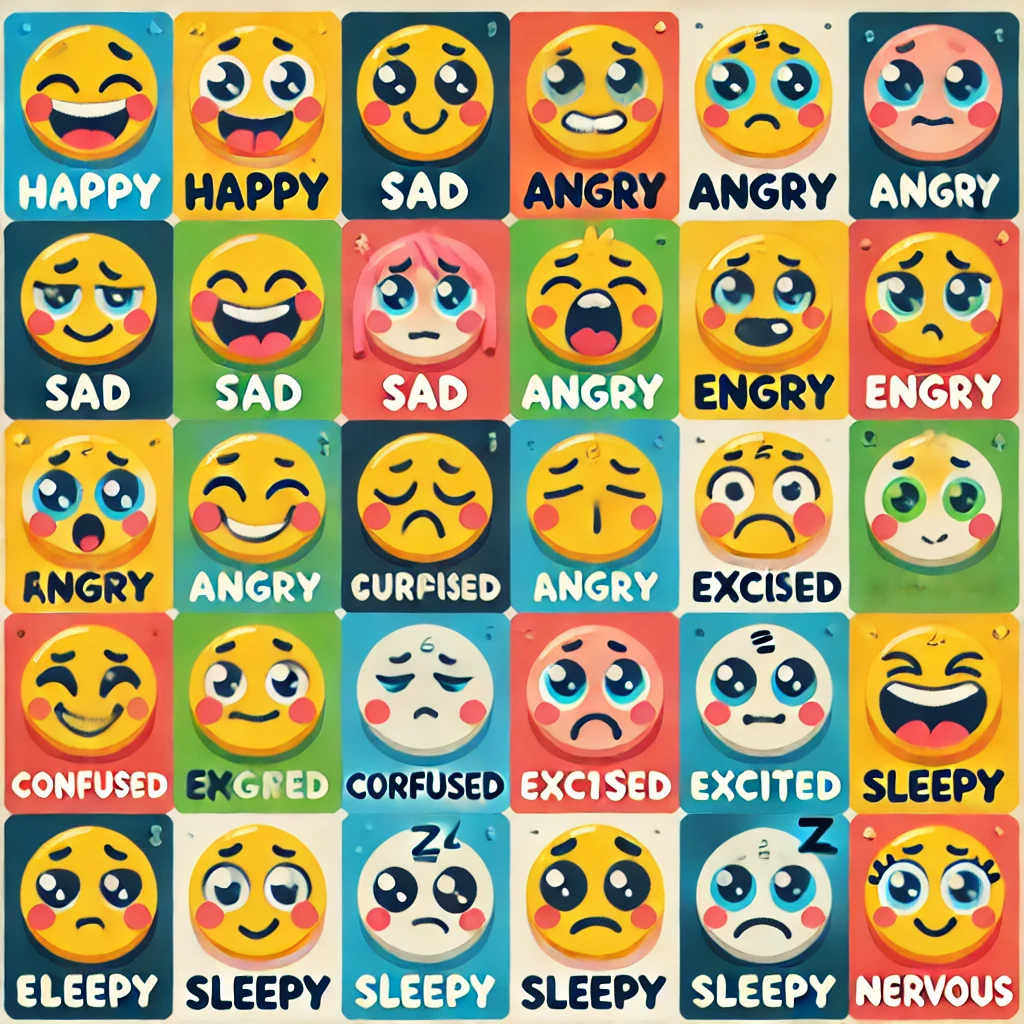
- Vocabulary: Feelings (happy, sad, tired, etc.)
- Speaking: Say how you feel today
- Listening: “I’m not tired today.”
- Reading: Mini diary entry about emotions
- SWAT: Students will be able to express basic feelings using “I am / I’m not …”
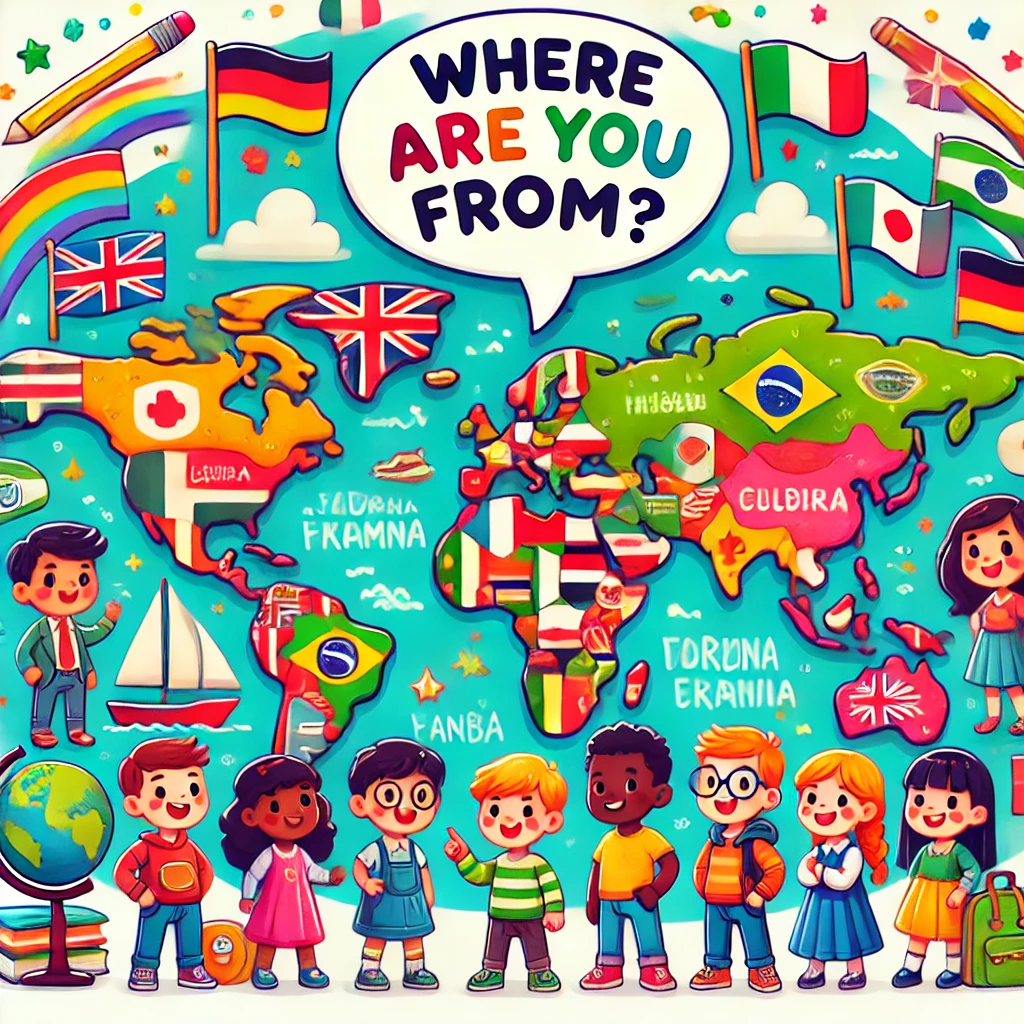
3. Where Are You From?
(Origin + first real question/answer loop)
- Grammar: To be — questions
(Are you from…?)
* preposition from - Vocabulary: Countries (Mexico, Guatemala, USA, etc.)
- Speaking: Ask & answer: “Where are you from?”
- Listening: Short interview with people from different countries
- Reading: World map biography snippets
- SWAT: Students will be able to ask and answer questions about origin

4. My Family Tree
(Personal Pronouns — talking about people)
- Grammar: Personal pronouns (I, you, he, she…)
- Vocabulary: Family members
- Speaking: Introduce your family
- Listening: “He is my brother. She is my mom.”
- Reading: Short family description
- SWAT: Identify and describe basic family members using pronouns.
Example: “She is my sister. He is my dad.”

5. What’s in My Backpack?
(Articles — a / an)
- Grammar: Articles (a / an)
- Vocabulary: Classroom objects
- Speaking: Describe what you have in your backpack
- Listening: “I have a pencil and an eraser.”
- Reading: Classroom inventory note
- SWAT: Describe classroom items using a/an.
Example: “I have a notebook and an eraser.”
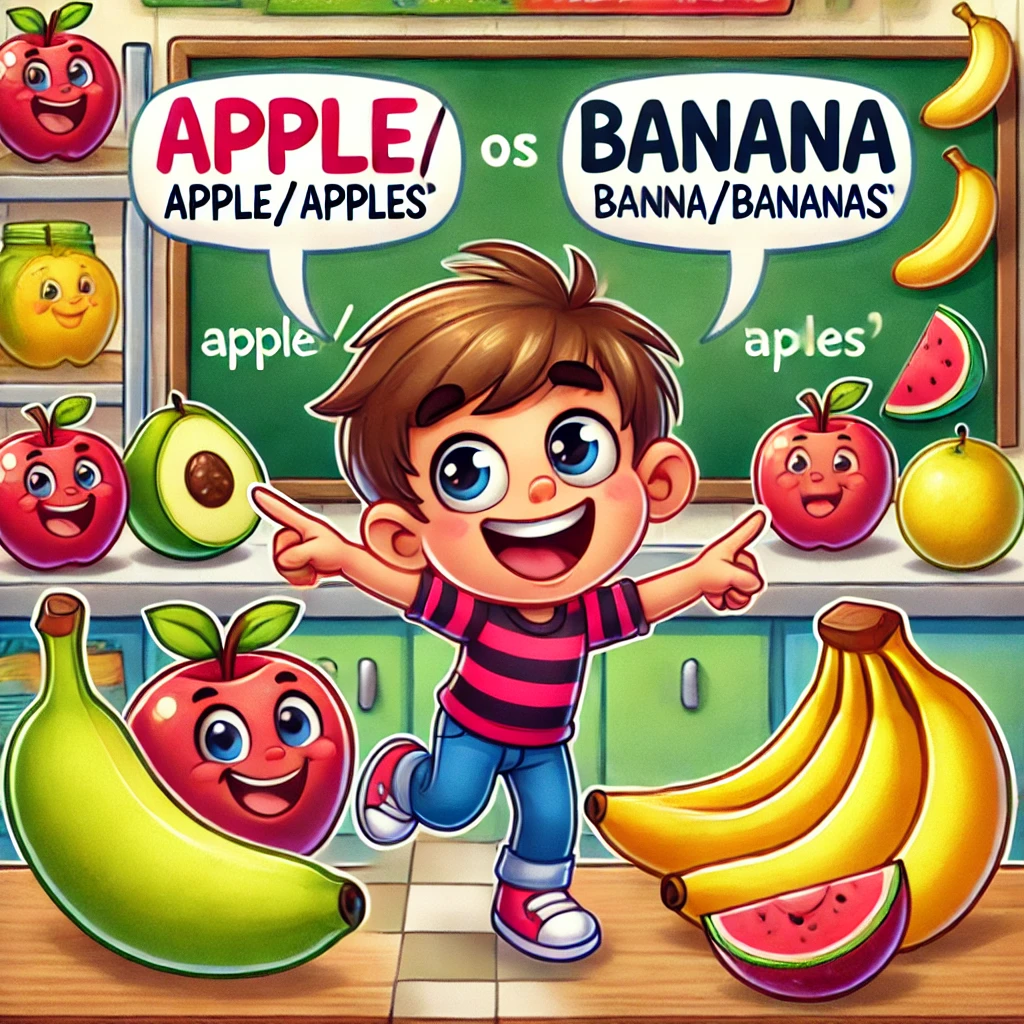
7. Apples or Bananas?
(Singular & Plural — food vocabulary)
- Grammar: Singular & Plural nouns +
Some / Any - Vocabulary: Fruits & vegetables
- Speaking: Talk about likes and dislikes
- Listening: “I like apples. I don’t like lemons.”
- Reading: Simple grocery list
- SWAT: Use singular/plural nouns to express likes and dislikes.
Example: “I like bananas. I don’t like oranges.”
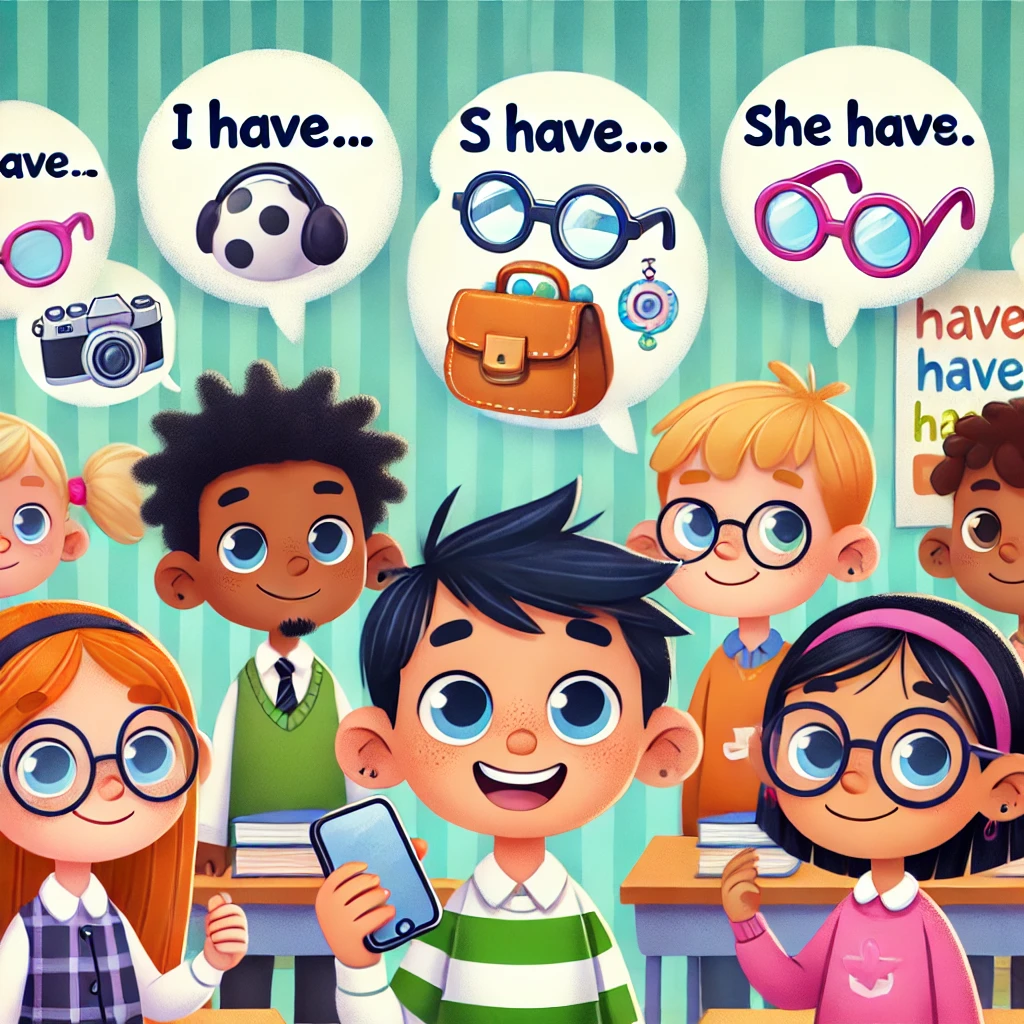
8. What Do You Have?
(Have / Has — describing possessions)
- Grammar: Have / Has (affirmative) + Adjective Order
- Vocabulary: Personal items (phone, bag, glasses)
- Speaking: Talk about what you have
- Listening: “She has a red bag.”
- Reading: Short profile of a person and their items
- SWAT: Describe possessions using have/has.
Example: “I have a phone. She has a bag.”
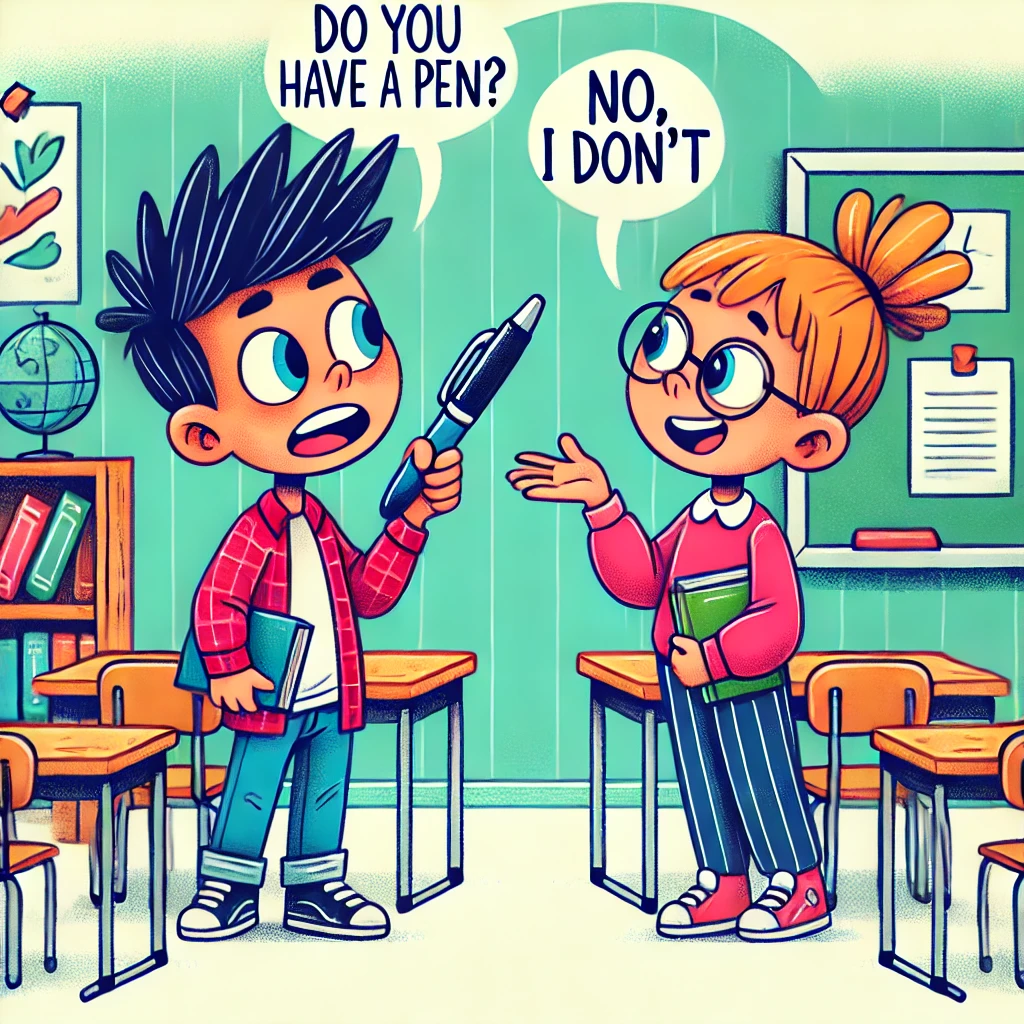
9. Do You Have a Pen?
(Have / Has — questions & negatives)
- Grammar: Have / Has — negative and questions
- Vocabulary: School supplies
- Speaking: Ask “Do you have…?”
- Listening: “Do you have a pen?” “No, I don’t.”
- Reading: Checklist of needed supplies
- SWAT: Ask and answer questions using have/has.
Example: “Do you have a pencil?” “No, I don’t.”
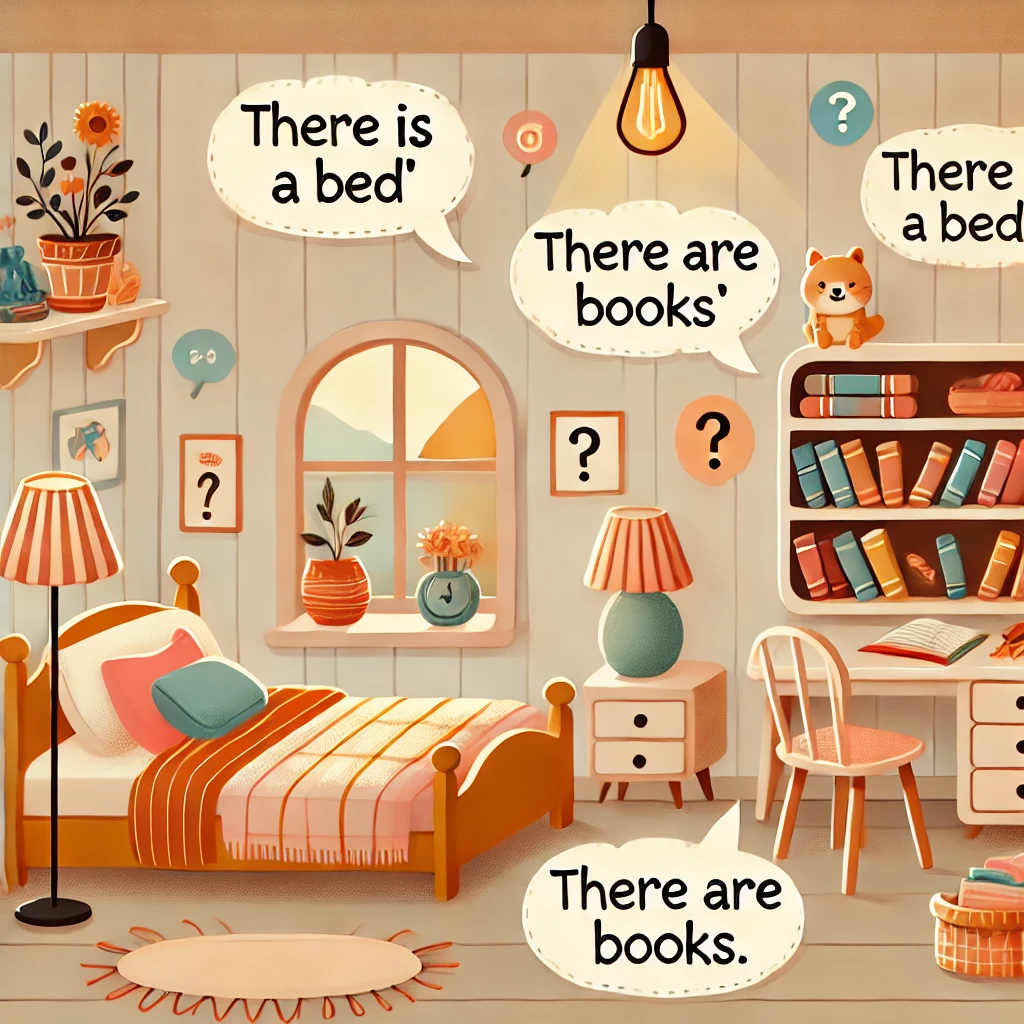
10. What’s in My Room
(There Is / There Are — describing spaces)
- Grammar: There is / There are
- Vocabulary: Rooms & furniture
- Speaking: Describe your room
- Listening: “There is a table in the kitchen.”
- Reading: Short apartment layout description
- SWAT: Describe a room using there is / there are.
Example: “There is a bed in my room.”
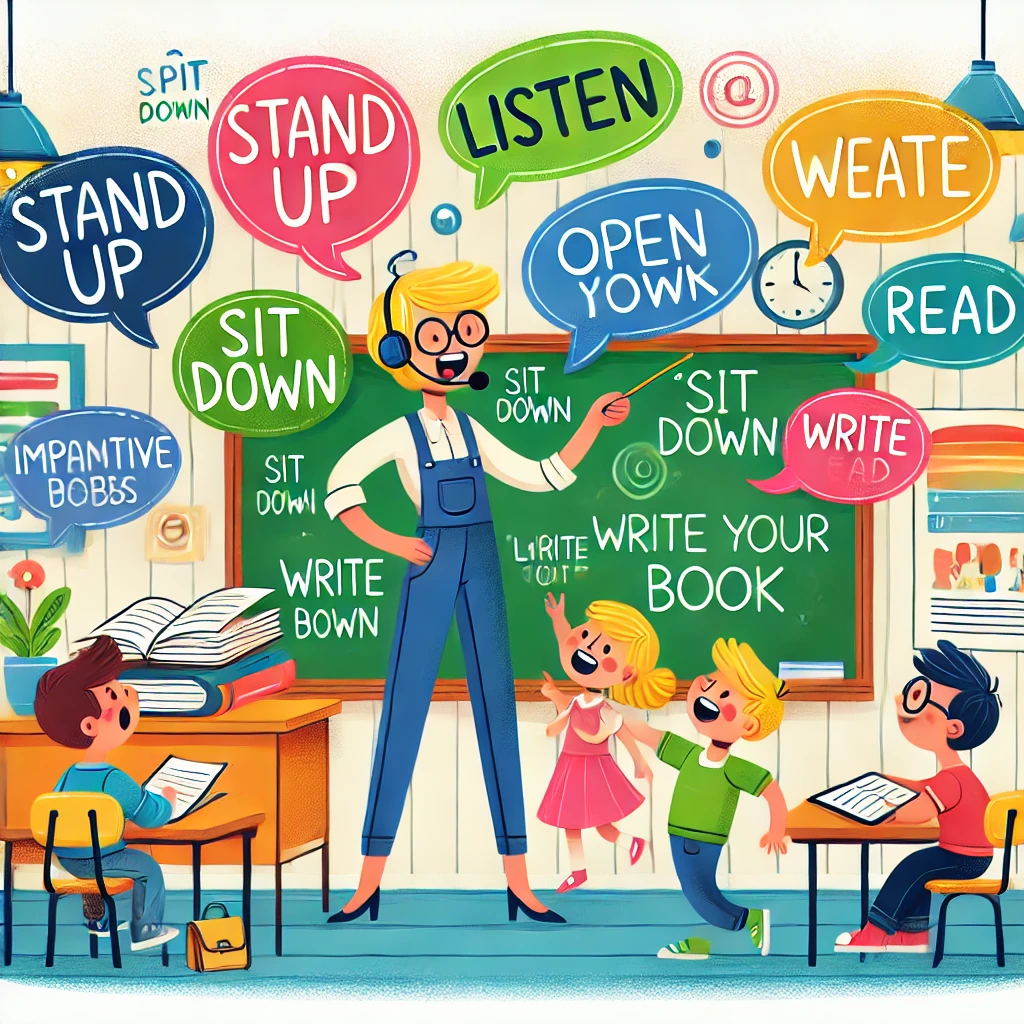
11. Stand Up, Please
(Imperatives — giving instructions)
- Grammar: Imperatives (Sit, Open, Listen…)
- Vocabulary: Common classroom actions
- Speaking: Give simple commands
- Listening: “Stand up. Close your book.”
- Reading: Classroom rules poster
- SWAT: Give and understand simple classroom commands.
Example: “Sit down. Open your book.”
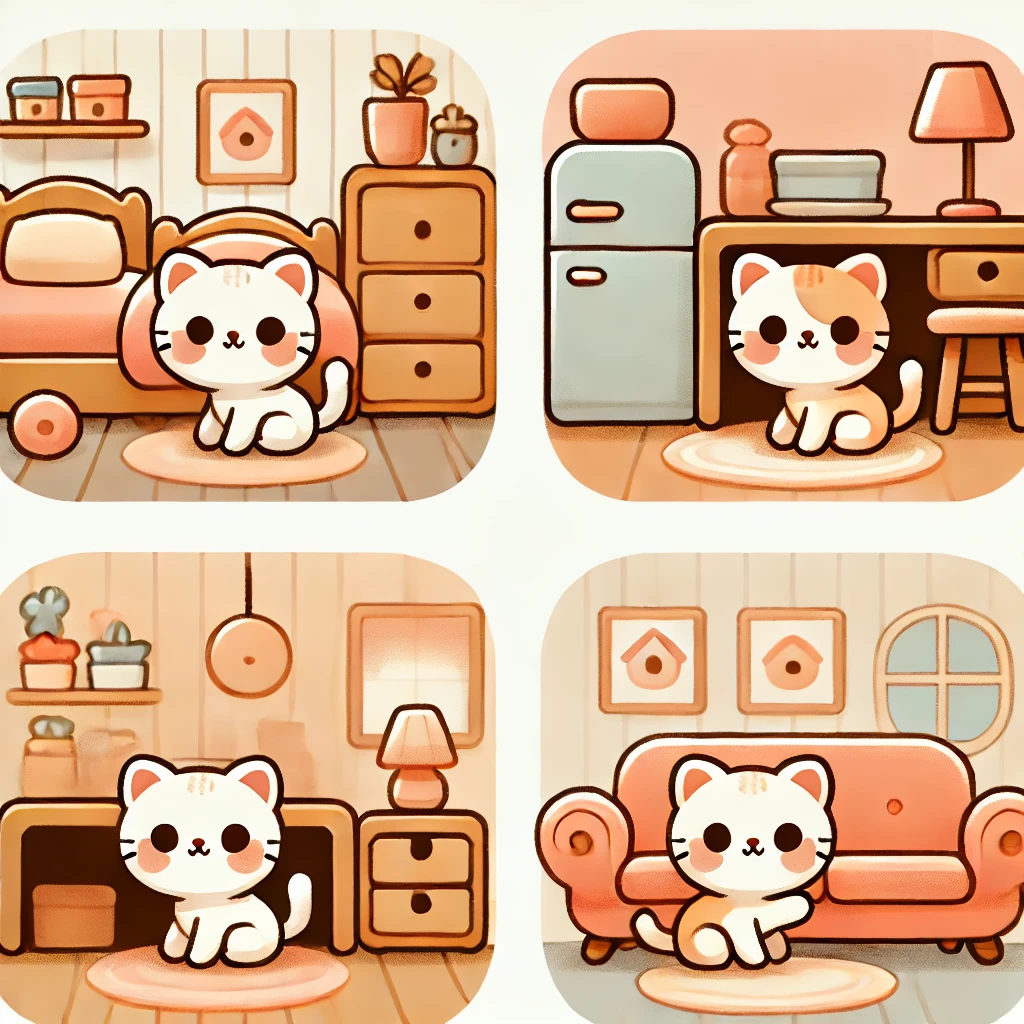
12. Where Is the Cat?
(Prepositions of Place — in/on/under)
- Grammar: Prepositions of place
- Vocabulary: House items
- Speaking: Say where things are
- Listening: “The cat is under the bed.”
- Reading: Picture description: “In the living room…”
- SWAT: Describe where objects are using basic prepositions.
Example: “The book is on the table.”

13. I Can Swim
(Can / Can’t — talking about ability)
- Grammar: Can / Can’t
- Vocabulary: Verb abilities (run, swim, dance…)
- Speaking: Say what you can and can’t do
- Listening: “I can swim but I can’t drive.”
- Reading: Simple talent profile
- SWAT: Express what they can and can’t do.
Example: “I can dance, but I can’t draw.”
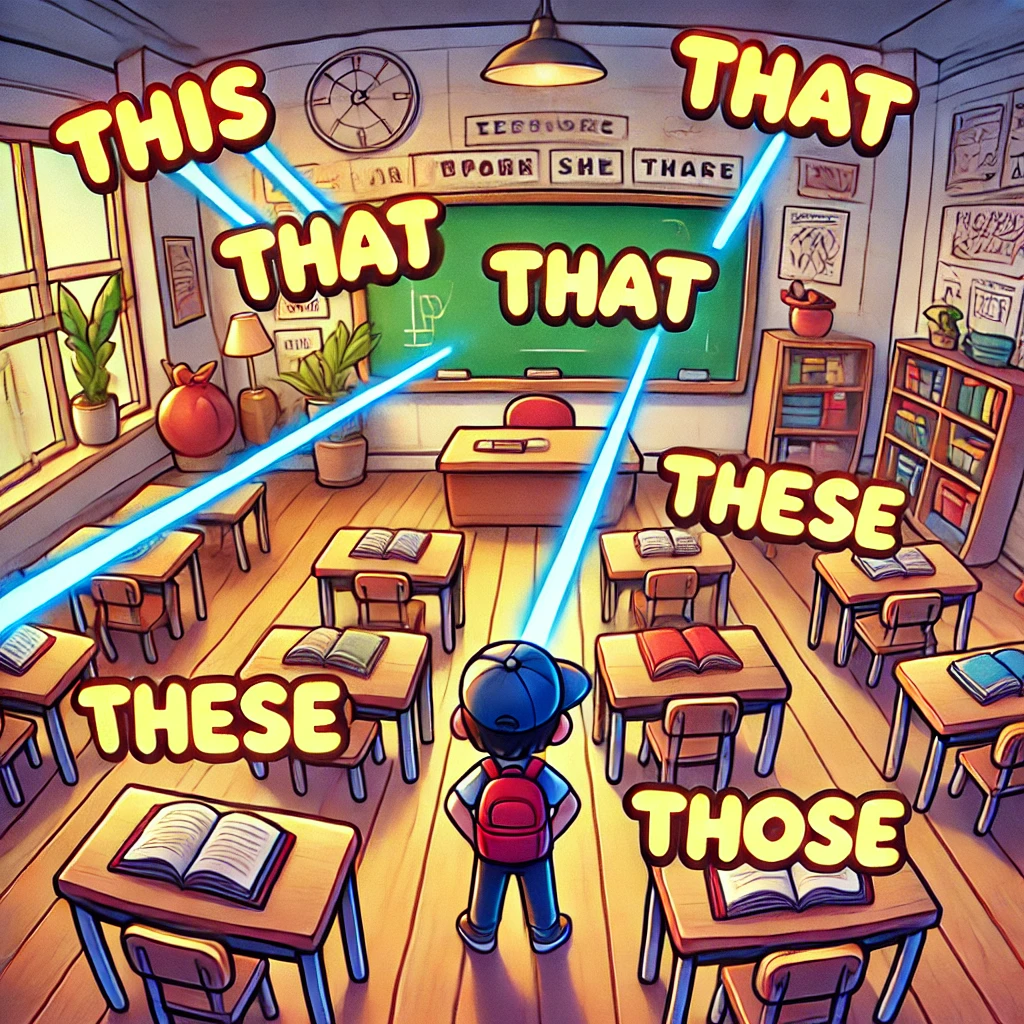
6. Near or Far?
(Demonstratives — this/that/these/those)
- Grammar: This / That / These / Those
- Vocabulary: Everyday objects
- Speaking: Identify things near and far
- Listening: “This is a phone. Those are my keys.”
- Reading: Object labels in a room layout
- SWAT: Point to and identify objects using demonstratives.
Example: “This is my bag. Those are my shoes.”
15. This Is Me
(Final Performance — Pre-A1 Certification)
Objective: Demonstrate basic communication skills learned in the Pre-A1 course.
Example output:
“My name is Ana. I am from Guatemala. I like music. I have a backpack. I’m happy.”